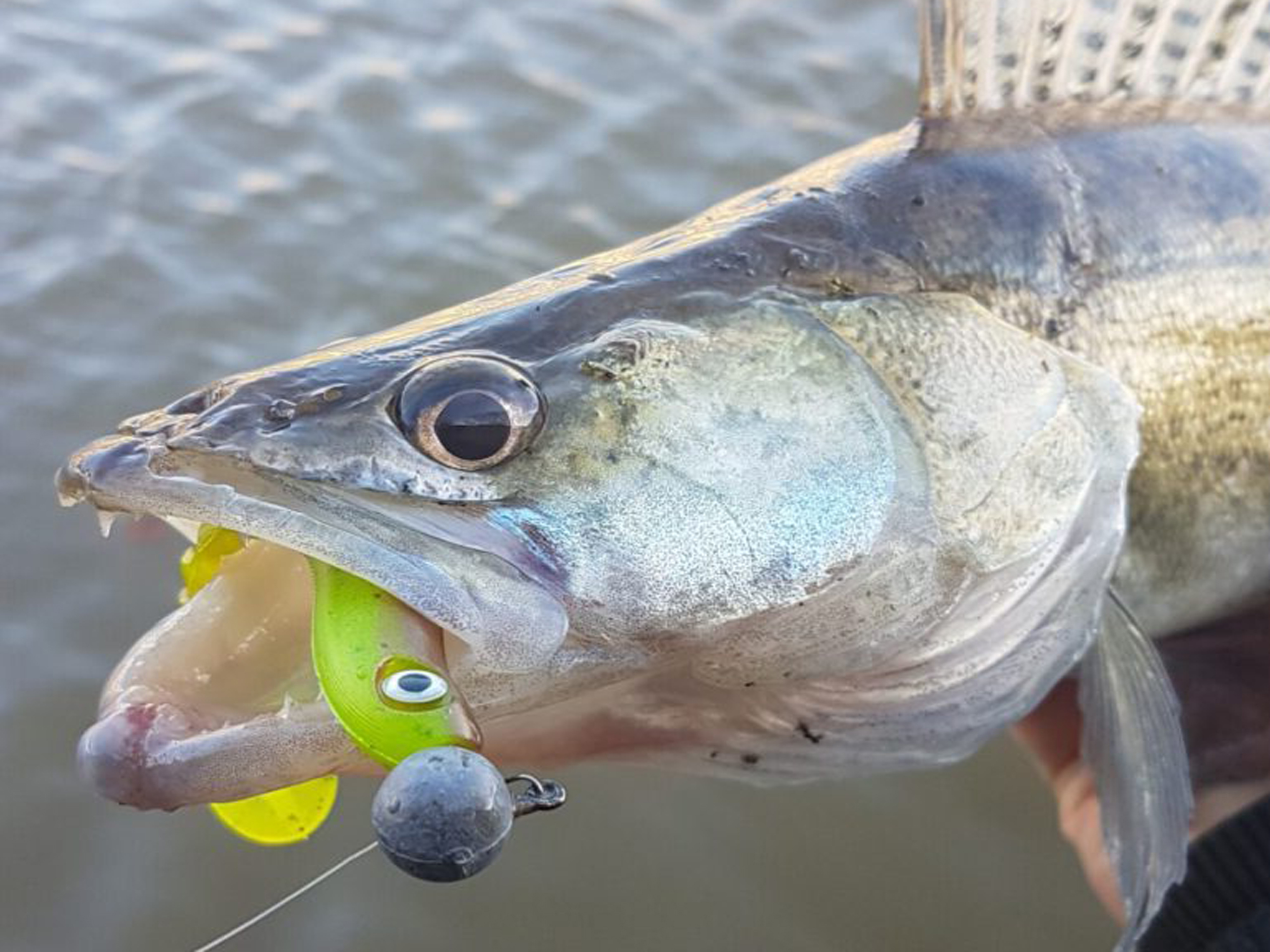
Choosing jig heads for soft lure fishing is often complicated. The wide range of jig heads on the soft lure market can sometimes be confusing. Each brand has its own models, which can be classified into different families with unique characteristics. It is these characteristics that determine how they are used. The jig head plays an important role in the success of your fishing by influencing the swimming action of the lure, its presentation on the bottom and how realistic it looks. But the choice of your jig head depends mainly on the fishing situation you encounter and the technique you use, as well as on the predator you are targeting, and therefore on the choice of soft lure.
Three criteria vary from one jig head to another:
How to match your jig head to the soft lure you use
To understand how to weight a lure of this type, you need to look at its shape and its texture. It is therefore essential to take these two parameters into account when choosing your jig heads. Fishing without paying attention to them is impossible. The texture has varying degrees of softness depending on the vibration signature wanted for the lure. It is the main parameter that governs the movements of the lure when it is worked. That is why it is impossible to fish properly while ignoring it. A very soft lure will swim easily with a low weight. And of course, it is the opposite with a rigid plastic.
That is why it is impossible to fish properly while ignoring it. A very soft lure will swim easily with a low weight. And of course, it is the opposite with a rigid plastic.
Although vibrations depend on the texture, the shape of the vibrating appendage at the tail is also a source of them. The shape of the tail has a great influence on the weight to use. Its appearance lets us find the right weight to set it in motion. If we take two common types of soft lure, such as a shad and a finesse lure, the vibrations obtained are radically different, in fact opposite. The tail of the shad, heavy and wide, offers great resistance to the water. The shape of the finesse lure, lighter and thinner, offers almost none. It therefore seems logical to use different weights to set these two types of tail in motion, at the same speed of course.
To choose your jig heads, besides the soft lure used, the shape of the jig heads considerably influences their behaviour in the water and, consequently, that of your soft lure.
The centre of gravity:
first of all, the general shape of the jig head, and therefore the distribution of the lead mass, determines its centre of gravity. Depending on the position of the latter, more or less towards the front, the sinking speed, the stability and the presentation of the lure on the bottom are different.
The contact surfaces:
also depending on the general shape, the surfaces of your jig head that bear on the water have a major influence on the swimming action of your lure and are even decisive in some types of fishing.
The position of the eyelet:
finally, the last parameter that influences the behaviour of your jig head is the position of the attachment point, generally at the front or in the middle.
The different types of jig heads for soft lure fishing
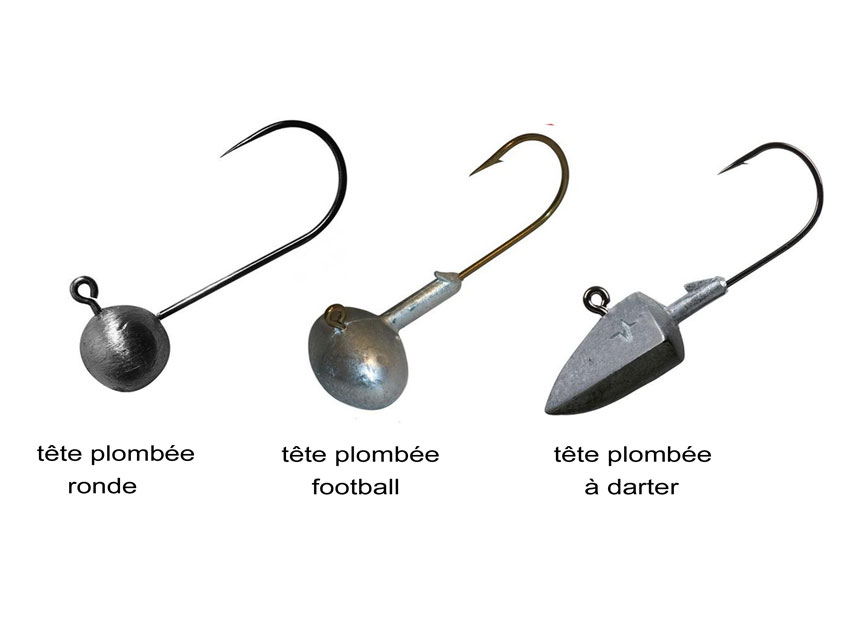
Admittedly, the weight of the jig head lets you cast your soft lure more or less far. However, its characteristics obviously do not stop there. Indeed, once in the water, it gives the lure a very specific type of swimming action. To choose your jig heads for soft lure fishing, they can be classified into different families.
Round jig heads
The round-head jig heads are generally the most used. And it is very easy to see why: the round jig head is quite simply the most versatile! It suits most soft lures, especially shads. It excels in calm water with no current. It offers very little grip on the water and is therefore a major asset for straight-retrieve fishing. We use them regularly for all our straight-retrieve fishing on dam lakes.
Football jig heads
These heads are often used for bottom fishing, dragging along the bottom. They are essential when zander are focused on picking up dying prey on the bottom. Because of its shape, your lure will rest flat on the bottom and not head down. Positioned like this, your soft lure imitates a small fish looking for food on the substrate to perfection. The football shape also stops your lure from tipping sideways, so it stays well balanced and is easier for the predator to take. In addition, this jig head excels in straight-retrieve fishing. Indeed, during the retrieve, the flow of water over the head makes it tilt from left to right and so increases the rolling of your shad… This feature is a considerable asset for pike fishing with big shads. Finally, this shape gives the lure great responsiveness, so that thanks to football jig heads it starts its swimming action more quickly. This is a feature highly appreciated by anglers who fish zander vertically in particular.
Darter jig heads
This triangular head, with a tapered shape and a flat underside, offers little resistance to the water. The flat part gives a gliding effect. It is perfect for straight retrieves on shallow flats and drop-offs. During the sink or in the retrieve phase, worked with small twitches, it produces a “darting” effect. If you use this head with a finesse lure (without a tail), the side-to-side movements will guarantee you a great result on perch feeding frenzies, as well as on zander…! Chosen with a lower weight, it makes your lure glide more than with a classic round head. It is also essential for “free-line” fishing, in mid-water or in a river where there is current. Its profile lets it glide through the water without pulling on the rod. You can therefore reduce the weight of your jig head, to make it easier for predators to swallow your lures.
The colour of your jig heads: essential or not?
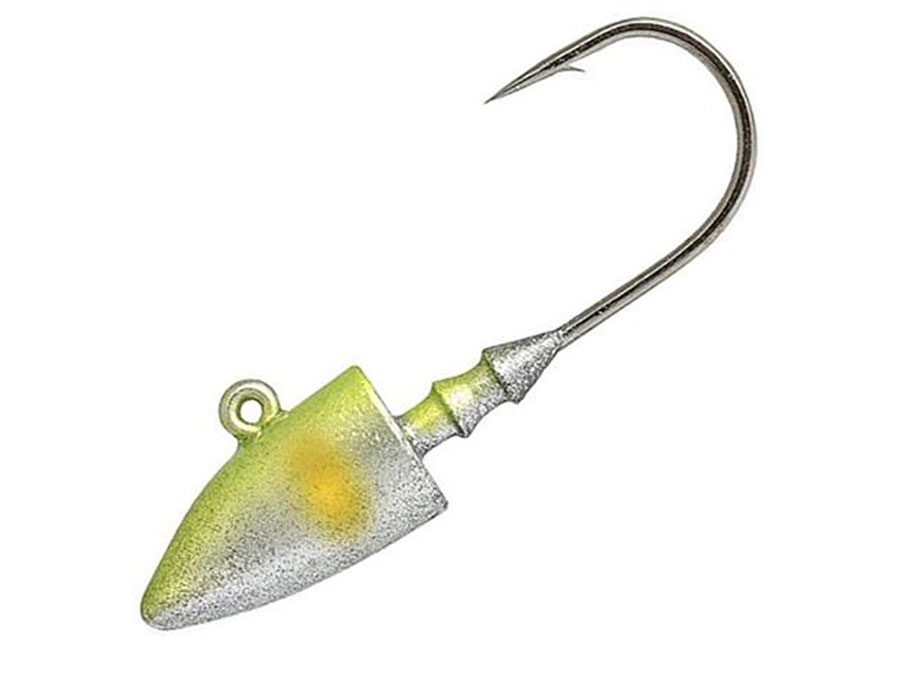
Should you choose coloured jig heads or not…? The choice depends on the fishing. Sometimes yes, sometimes no. We always have heads of different colours in our boxes to offer our fishing partners. Especially for zander fishing. A zander can completely ignore a soft lure mounted on a neutral jig head and throw itself eagerly on a coloured head. We noticed long ago that a jig head of a different colour from the lure could significantly increase the number of bites. This is particularly true when the water is coloured. A flashy head makes your lure more visible to the predator. You can match the colour of your jig heads to that of your soft lure. You can also choose a contrast between the two elements.
Knowing how to choose your jig heads is a real asset, just as much as knowing how to choose the right lure. Gliding effect, rolling, tipping speed, ability to resist under the water… It is therefore essential to understand and master the characteristics of each of these jig heads.