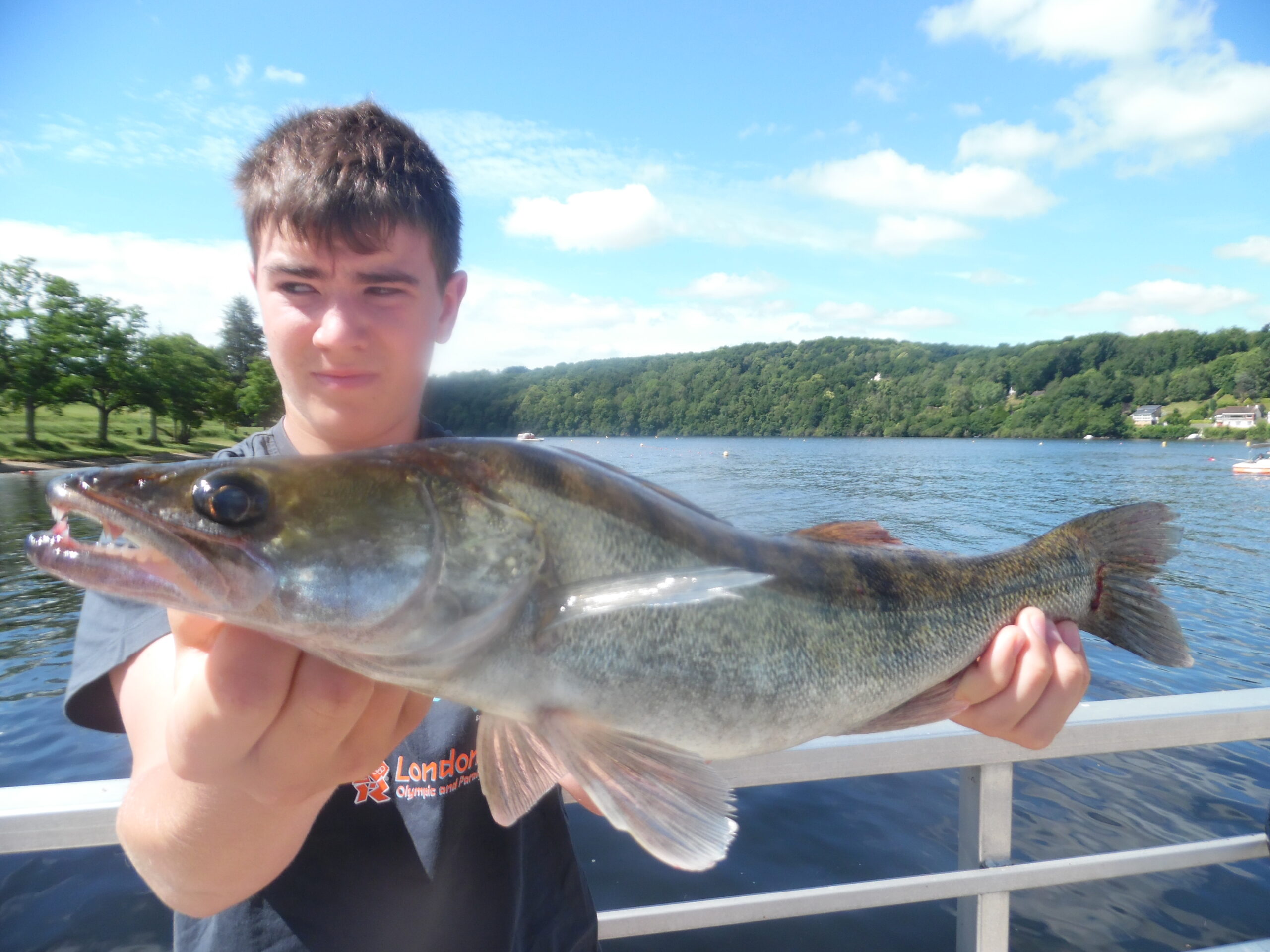
Fishing zander properly with a straight retrieve: the zander, a fish that is so mysterious and so hard to catch for our young apprentices, arouses real passions and questions. Besides vertical fishing, zander fishing with a straight retrieve remains a simple technique to put into practice and just as effective. This practice, which does not require great technical mastery, is mainly done by casting and retrieving over large areas, generally worked at medium or long distance from the banks (or from a boat or a float tube, depending on what is possible)). The ideal is to make your soft lure swim as slowly as possible and as close to the bottom as possible..
Choosing the right tackle for straight-retrieve zander fishing
For the rod, use a power of 5-20 g, or even 7-28 g. It is ideal for dealing with almost every fishing situation. The length of the rods we use from the bank is 2.40 m. This gives us a longer lever arm to send our soft lures as far as possible. In addition, a rod of this length lets you control your line better, and therefore present your lures better. The rod must be crisp and have a fast action, to cast your lures effectively and feel the bites better.
You must have a light, balanced outfit so as not to get tired. The technique involves hundreds of casts over your fishing day. The reel will be a size 2000 to 2500. For our part, we provide our young trainees with DAIWA Ninja 2500 reels. The zander is not a very combative fish. So it is not necessary to have a reel with a large braid capacity and a powerful drag.
As for the braid, it must be clearly visible and fluorescent in colour. Indeed, as we will see further on in this article, many bites are detected with the help of the braid. The diameter must not be too thin, so that it does not cut through the water too easily. A thicker braid, around 0.15 mm, will tend to rest on the water as the lure sinks, and will accentuate the gliding effect of our rig.
As for the jig heads, round ones are generally the most used, especially if you keep the pauses in your retrieve to a minimum. The football jig heads increase the rolling of your soft lure and keep your soft lures balanced during pauses on the bottom. In some situations, particularly on shallow flats when the zander are active, use triangular-type heads. By choosing this type of jig head you can get “darts” (side-to-side movements), producing quite sharp rod-tip twitches immediately followed by a good deal of freedom in the slack line.
The best fishing spots for straight-retrieve zander fishing
Where can you fish zander with a straight retrieve? Almost anywhere! But not at just any time. To fish a species of predatorwell, we must above all know its way of life and its behaviour. One of the essential things to know about the zanderis that it shuns light. It does not like sunlight very much. So when the light is low on the horizon (morning and evening), the fish move mainly onto shallow water, close to the banks and other gently sloping shelves.
As soon as the sun rises and the light strikes the surface of the water strongly, zander will tend to move away from the edges to reach deeper areas. From then on you must be observant and look for the interesting areas: rocky scree, points, rocky spurs, drop-offs…
To help you locate these spots, all you need to do is observe the bank. What you can see (big rocks, steep slopes, small stones…) carries on along the banks and sometimes continues for several tens of metres.
The stronger the light and the warmer the water, the more the fish will tend to take refuge in cooler, shaded areas. On dam lakes , where we train our young anglers, scree with big rocks regularly gives us satisfaction. The zander are at sufficient depth to be sheltered from the sun's rays. They also take advantage of the spaces between these rocks to find shaded areas.
Which soft lures should you choose to fish zander by casting and retrieving?
In general, fishing for zander with a straight retrieve goes hand in hand with using soft lures of the “shad” type. However, you can just as effectively use “finesse” type lures. These finesse lures have undeniable advantages compared with shads. First of all, they give off low-amplitude vibrations. Then they are far too little used, which makes zander less wary. Very aerodynamic, they cast easily over long distances. The lack of confidence in these lures comes mainly from the fact that in a straight retrieve they seem totally inert. And yet they move a small amount of water, and that is more than enough for zander (and for predators in general) to identify and locate them. Less vibration means less resistance when pulling but also when sinking, so you can fish much lighter with a finesse than with a shad.
The size of the soft lures we recommend to our young participants is generally 4 or 5 inches. You can go down to 3-inch lures when zander are focused on small prey. To be effective, your soft lures must be rigged correctly on your jig heads. Ahook shank that is too long restricts the vibrations of the lure. Your hook must not extend beyond 50% of the length of your shad or finesse lure. The point of your hook must clearly emerge on the back of your shad, so that you can set the hook effectively.
The secrets of successful fishing
Working the lure
Working the lure for this type of fishing remains simple, basic and accessible to every angler, whatever their level. All you need to do is cast your lure, to the desired fishing area. When the rig hits the surface of the water, raise your rod to the 11 to 12 o'clock position and close the bail of your reel. Lower your rod to point it at an angle of “10 to 11 o'clock”, and let your lure sink freely towards the bottom. As soon as you feel your rig touch the bottom, retrieve your braid with a few turns of the reel. Then let the lure fall back to the bottom for a short pause of a few seconds or tenths of a second. Carry on your retrieve until the bank at your feet.
Depending on where the fish are, you can also fish shallower, even mid-water. The working stays the same, except that your lure does not touch the bottom. The difficulty lies in letting your rig fish at the same depth in the water column throughout the whole working phase.
When fishing like this from the bank, you fish from the deepest water (offshore) to the shallowest (bank). As a result, as you take in braid, your lure risks touching and snagging on the bottom. As soon as you make contact with the bottom, raise your rod and take in the excess braid. This will make your rig rise to pass over the obstacles. Then carry on working the lure as before.
Steep banks and other drop-offs.
In this type of configuration, if you work the lure as explained above, it risks passing over the predators lying on the bottom. This is because your lure descends like a pendulum, not vertically.
To remedy this drawback, you can release a few turns of braid from your reel during your retrieve and raise the angle of your rod up to 11 to 12 o'clock, then accompany the descent of your lure. You may need to extend your arm to control this descent better.
Varied angles of approach
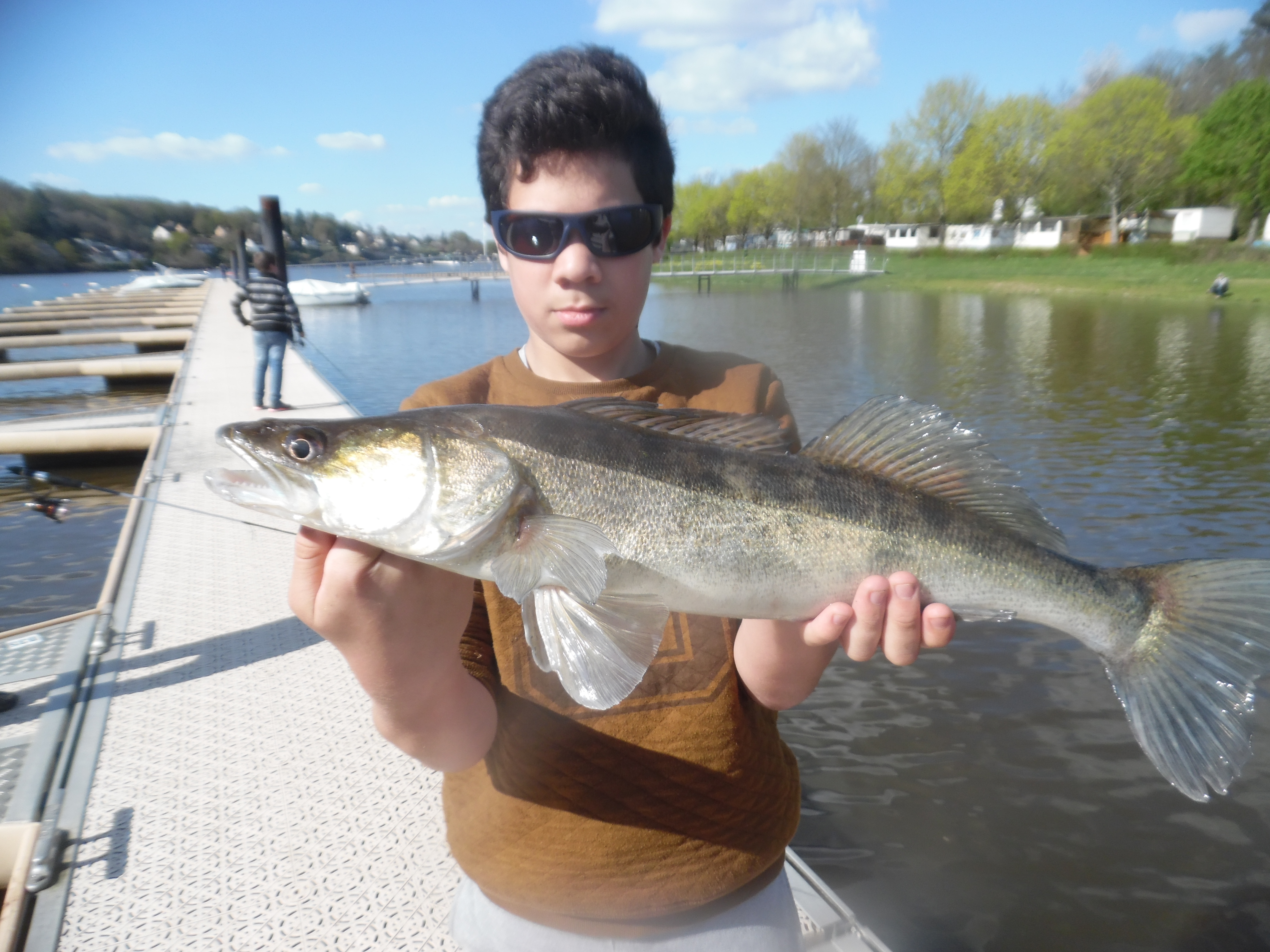
It is important to vary your casting angles to present your lure properly to the zander and to limit snags on the bottom. Depending on the position of the fish, the lure will be more or less well perceived by the fish. From the bank, I advise you to sweep the area from right to left, without forgetting to fish along the edge. Then start again from left to right. Try different water depths to flush out the predator. On rocky groynes, comb the area meticulously from the shallowest to the deepest, on each side of the obstacle. For areas cluttered with trees and other dead wood, fish from the farthest to the closest to the obstacle.
That way you will not arouse the suspicion of the biggest fish, which are generally positioned in the deepest part or in the heart of the obstacles.
Keep your weights to a minimum
When fishing with a straightretrieve, the choice of jig head weight is crucial! The basic rule recommends 1 g of lead per metre of depth. However, this rule depends on many other parameters. It is conditioned by the soft lure used, the desired fishing depth, the wind and the current…
Your lure must ABSOLUTELY have a gliding action and be as light as possible. That way the zander will find it easier to take your rig. That is why a lure with a rather gliding action and little weight will be more effective for this type of fishing. The zander are extremely sensitive to the presentation of the lure. They have an enormous ability to foil our traps.
Nevertheless, it is obvious that to begin with you need to weight your rigs a little more, among other things to feel the contact of the lure with the bottom properly. As you gain experience, you will be able to lighten your weights.
Line control
Line control is certainly the most important element in the success of fishing for zander with a straight retrieve. In most cases, zander tend to attack your lure on the falling phase of your retrieve. And the bites are sometimes so subtle that you can only see them thanks to your braid. Hence the value of using a bright, easily visible fluorescent braid! During the sinking phase your line must be slightly relaxed, creating a slight slack in the line. If all the parameters mentioned above are in place (braid diameter, lightened weight, choice of soft lure…), this slight curve in the braid will be easy to achieve.
So even before you feel the bite in the rod, you will detect it through the tension on the braid!
If your braid is too tight because of a weight that is too heavy, zander will immediately feel the tension and will not suck in your lureproperly. For your part, you will also tend to strike too early, which increases the number of missed bites.
Finally, it is important not to forget to respect the fishing rules in force and to respect catch limits and legal catch sizes. Fishing for zander can be very rewarding if practised responsibly. By following this advice, anglers can increase their chances of success when fishing for zander with a straight retrieve.