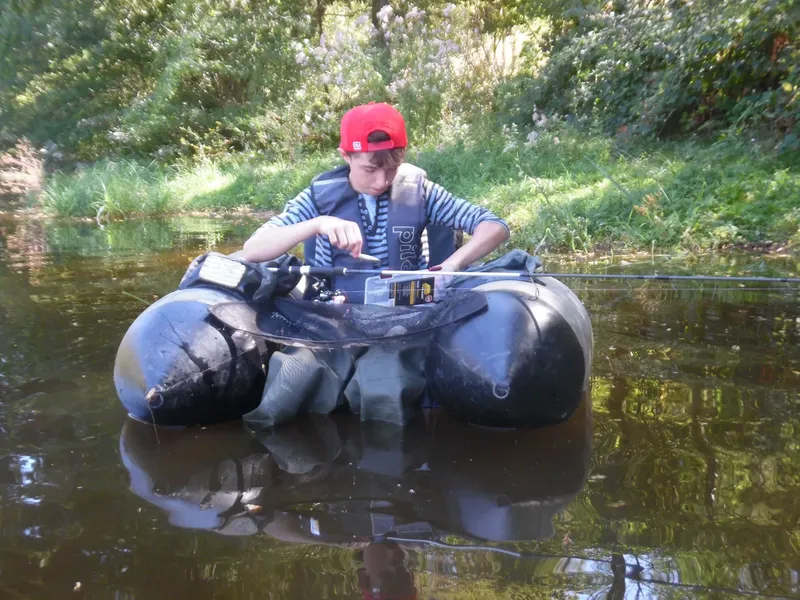
Choosing a float tube is a decisive step for any keen angler. This discreet craft has revolutionised predator fishing by offering privileged access to the most remote areas. When you choose your float tube, you gain incomparable freedom to explore inaccessible banks and track fish in their natural habitat. The variety of models on the market can make your choice difficult. As an experienced angler, I share with you the essential criteria for choosing the ideal float tube, covering every aspect, from safety to the different types of construction, without forgetting transport, storage and maintenance.
Types of float tubes: how to choose a float tube according to its construction
The process of choosing a float tube starts with understanding the two main families available, which differ in their construction and therefore in their performance and price: models with air bladders and welded PVC models, often compared to “Zodiac”-type boats, such as the Sparrow float tube by Ches Sakura.
Float tubes with air bladders:
These more affordable models are made up of several independent air bladders, generally in thin PVC, which are inserted into a fabric cover. Their attractive price and relative ease of repair are their main advantage: in case of a puncture, you can often replace a single bladder. However, this design also has drawbacks. Rubbing against branches, rocks or abrasive bottoms makes the outer fabric more vulnerable, which can affect its long-term durability.
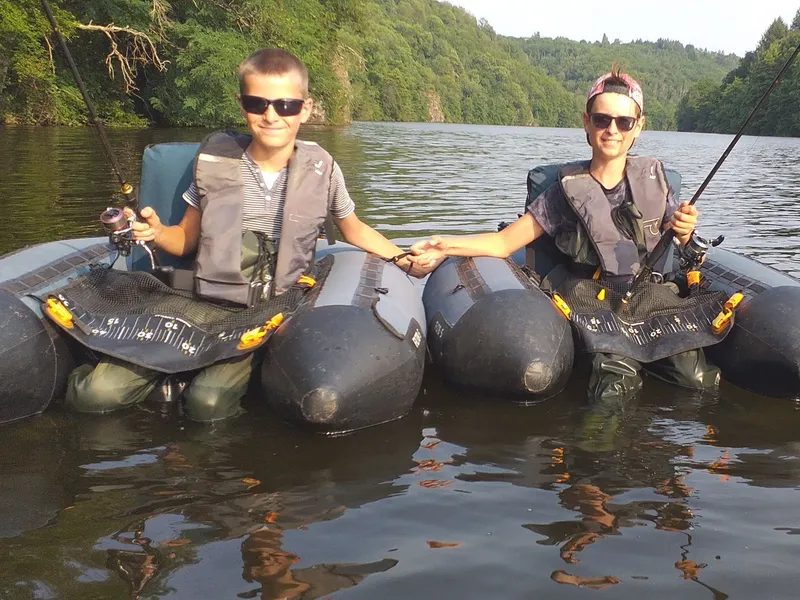
In addition, gliding through the water is less efficient than with welded PVC models, which makes getting around more laborious, especially over long distances or against the wind. These float tubes are perfectly suited to beginners who want to try float tube fishing without investing a large sum, or to occasional anglers who fish calm waters with few obstacles. These are the models we use during our fishing camps for teenagers
Welded PVC float tubes:
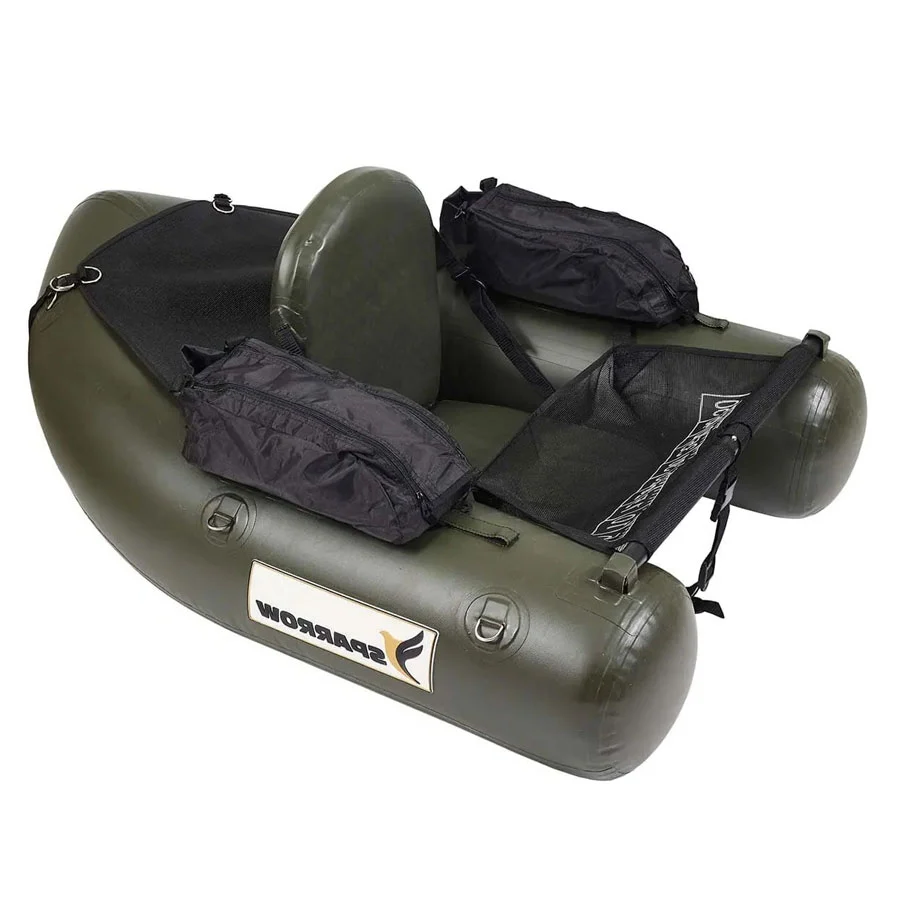
These are the top of the range. They are made from thick PVC assembled by heat welding, which gives them exceptional strength and watertightness. This construction offers increased resistance to abrasion, UV rays and punctures, guaranteeing a durability far superior to models with air bladders.
In addition, the smooth surface of the PVC allows optimal gliding on the water, making it easier to move and manoeuvre, even against the wind. This feature is particularly appreciated by anglers who cover large stretches of water or who fish rivers with a light current. Although more expensive to buy, these models are a lasting investment for regular anglers and for more demanding environments.
Selection criteria: the key elements for choosing a float tube
When you are looking to choose a float tube, several essential criteria come into play to guarantee comfort, safety and performance.
Size and maximum load:
The size of the float tube directly affects the angler's comfort and the amount of gear that can be carried. A larger model will offer more room for your legs and for storage, as well as better stability, which is particularly important for tall anglers or those who want to carry a lot of equipment.
However, a larger float tube will also be less manoeuvrable in cluttered areas, such as rivers lined with vegetation. The maximum load, for its part, is a key safety criterion. It must absolutely exceed the combined weight of the angler and all of his or her equipment, to guarantee optimal buoyancy and avoid any risk of capsizing.
Shape and seat:
The shape of the float tube plays an important role in its manoeuvrability and stability. There are three main shapes: U, V and hybrid. First of all, the V shape cuts through the water better and therefore offers greater stability, which is a considerable advantage for moving quickly, particularly in windy conditions. Next, the seat must be comfortable, especially for long fishing sessions. In this respect, an adjustable backrest and an inflatable cushion provide better support and reduce fatigue.
Equipment and accessories:
The equipment and accessories built into the float tube can considerably improve the fishing experience. For example, well-placed pockets and storage spaces let you organise your gear efficiently and keep it within reach. In addition, secure rod holders are essential for carrying your rods safely while you move. Moreover, a landing mat lets you handle fish with respect and measure them easily. Last but not least, a fish finder mount is a valuable asset for exploring and locating fish.
Safety: a key aspect when choosing your float tube
Wearing a life jacket or a personal flotation device (PFD) is essential, even for those who can swim. Choose a model designed for fishing, with a short cut that does not hinder paddling and casting movements. Suitable footwear, such as wading boots or fishing boots, gives good foot protection and good grip on slippery banks. Before every outing, it is crucial to check the weather forecast and to give up fishing in bad weather (strong wind, storms, etc.). It is also important to find out about local regulations and any dangers at the fishing spot (currents, submerged obstacles, etc.).
Safety is a fundamental element when you choose your float tube. Although very enjoyable, this practice involves risks that must not be neglected.
Carrying a waterproof mobile phone lets you call for help in an emergency. A repair kit can prove useful for small repairs in the field. Finally, careful navigation, avoiding areas of heavy boat traffic and signalling your presence to other users, contributes to everyone's safety.
Transport, storage and maintenance: essential aspects for extending the life of your float tube
To get the most out of your float tube once you have made your choice, it is crucial to master the practical aspects of its use.
Transport
Transporting a float tube can raise several issues that need to be anticipated:
Having a vehicle or not
If you have a car, transport is generally easier. You can carry the float tube deflated in the boot, or inflated on the roof using suitable roof bars (making sure it is properly secured to avoid any accident). However, if you do not have a car, transport becomes more complicated. You should then favour light, compact models that are easy to carry on your back, or use public transport, taking care not to inconvenience other passengers.
Weight and bulk:
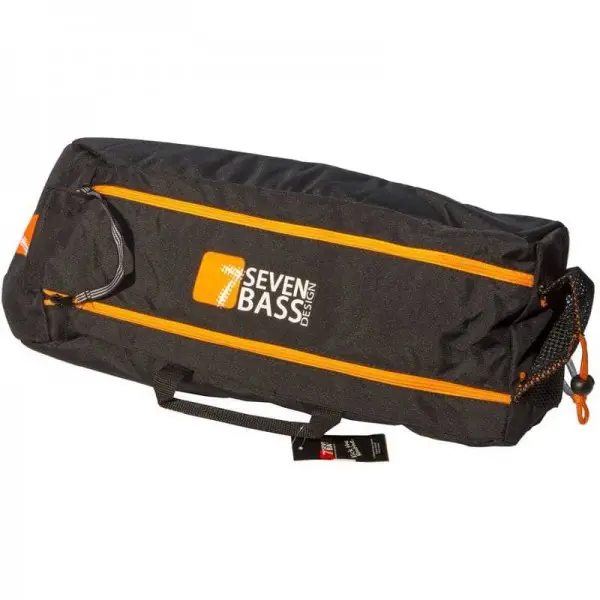
Welded PVC float tubes are generally heavier and bulkier than models with air bladders. If you have to walk long distances to reach your fishing spot, it is better to choose a lighter model, even if this means a larger investment. Using a suitable carry bag, with padded straps and a waist belt, can also make carrying it on your back easier.
Access to the fishing spot
Access to the fishing spot also influences the choice of transport method. For rough terrain or long walks, a light, compact model combined with a comfortable backpack-style carry bag is essential. If access is by a drivable track or a short distance, carrying it by hand, even a heavier model, may be an option.
Storage: good practice
Proper storage is crucial for the longevity of your float tube. Choose a dry place, away from direct sunlight and large temperature variations. Before long-term storage, make sure the float tube is perfectly dry to prevent mould. For models with air bladders, partial deflation avoids excessive tension on the seams and valves. Fold it carefully, avoiding sharp creases that could weaken the PVC in the long term.
Maintenance: the essential steps
Regular maintenance is essential to keep your float tube in good condition and extend its life. After each use, rinse it with clean water to remove dirt, algae, fishing residue and salt (if you fish at sea). Use a soft sponge and mild soap if necessary for more stubborn stains.
Then dry it completely in the open air, in the shade, before putting it away. Regularly inspect the seams, valves and zips for any wear or damage. Lubricate the zips with a silicone lubricant to keep them working properly. Protect the PVC from UV rays by applying a specific protective product. This helps prevent premature ageing of the material. In case of a small puncture or tear, repair it quickly with a suitable repair kit. A quick repair prevents the damage from getting worse.
Problems caused by poor maintenance:
Poor maintenance can have serious consequences for the life and safety of your float tube. Deterioration of the materials is a direct consequence. Prolonged exposure to sun, moisture and temperature variations can weaken the PVC and the seams, leading to leaks, tears and even complete failure of the structure. Mould and bad smells are another common problem.
Stagnant moisture, combined with dirt and organic residue, encourages the growth of mould and bacteria, which can not only cause unpleasant smells but also damage the materials and present a health risk. Oxidation of zips and metal parts also needs watching. Exposure to moisture and salt, particularly when used at sea, can corrode zips, rings, buckles and other metal parts, making them unusable and even damaging the fabric.
Consequences to avoid
Poor maintenance considerably shortens the life of the float tube. The accumulation of these problems accelerates general wear and can make the float tube unusable prematurely. Finally, and most importantly, a poorly maintained float tube is a risk to the angler's safety. An undetected leak, a weakened seam or a faulty zip can compromise the craft's buoyancy and stability, increasing the risk of an accident. By following this maintenance advice, you will extend the life of your craft and fully enjoy your fishing sessions in complete safety.
In summary, the float tube offers a unique and immersive way to fish for predators, giving access to areas that cannot be reached from the bank or with more conventional craft. Choosing your float tube well, by picking a model suited to your style of fishing, combined with particular attention to safety, transport, storage and maintenance, will guarantee enjoyable fishing sessions and optimal longevity of your