
Fishing with jerkbait swimming lures is bewildering for a young beginner. Faced with the multitude of hard lures on the market, the angler finds himself with a real headache when he has to choose. What size? What colour? What type of action? Many of you set them aside in favour of soft lures. However, fishing with jerkbait swimming lures is very pleasant. It is also very effective for catching your favourite predators.
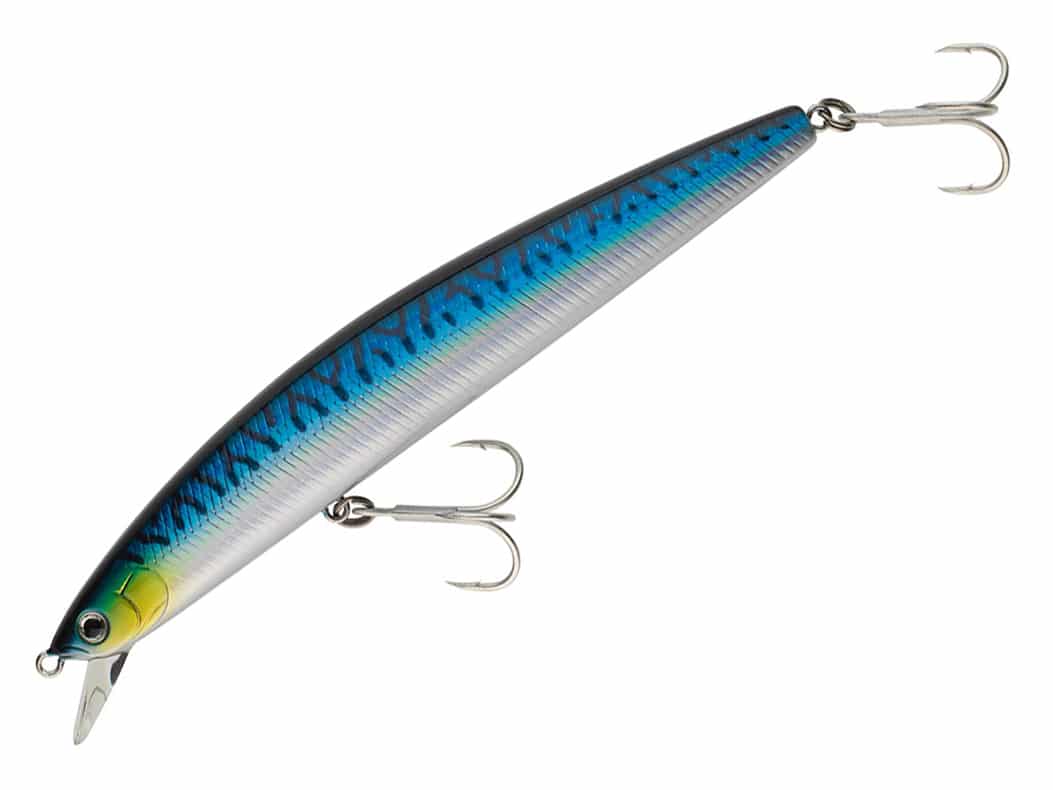
In this article I will try to give you the right landmarks and the right answers to your questions. That way you will be able to choose your swimming lure well. This choice is crucial for the success of your fishing, to meet the demands of predators…!
The jerkbaits belong to the family of swimming lures or hard lures . Unlike soft lures, which are made of soft plastic, it is long and slim in shape and looks so much like a real little living fish that you could mistake it.
Jerkbait literally means “lure that dances”. And indeed these swimming lures have mechanical abilities. If you work them properly, these swimming lures are real fish magnets! They dart in every direction or, on the contrary, shudder on the spot, imitating a panicked or injured little fish to perfection. Obviously such an action attracts the attention of the pike, which, like most predators, is interested first of all in sick or handicapped prey.
What size for your jerkbait swimming lures?
The choice of the size of your jerkbaits will generally be dictated by 2 main factors: the predator you are looking for, and the season in which you are fishing. If you are targeting perch or small fish, use a swimming lure of about 5-6 cm. If, on the contrary, you are hunting pike or other big predators, the size of the jerkbait will be larger, 12-15 cm. The angler chooses the size of the hard lure according to the fish being sought. The size of your jerkbait is usually shown on the product packaging. It is also shown in the model reference of the swimming lure.
E.g.: a DAIWA D'MINNOW jerkbait 150 measures 150 mm, or 15 cm.
In summer, forage fish (NB: small coarse fish born that year, such as roach or bleak) are present in large numbers, and many predators gorge on them. Using a small jerkbait can be wise. In winter, with the cold, fish tend to hold on the bottom and look for thermal comfort. They are in a rather non-aggressive state and not really inclined to make a big effort for a small prey. For this time of year, larger lures are preferred.
TIP: if you are unsure about the size of your lure, choose a small swimming lure. That way, if the big predators are not biting, you will have every chance of catching smaller fish. Besides, big fish do not hesitate to take a small prey. Given the size of their mouth, they have no difficulty eating it. On the contrary, small fish will have much more trouble attacking a big lure.
What fishing depth for your jerkbait swimming lures?
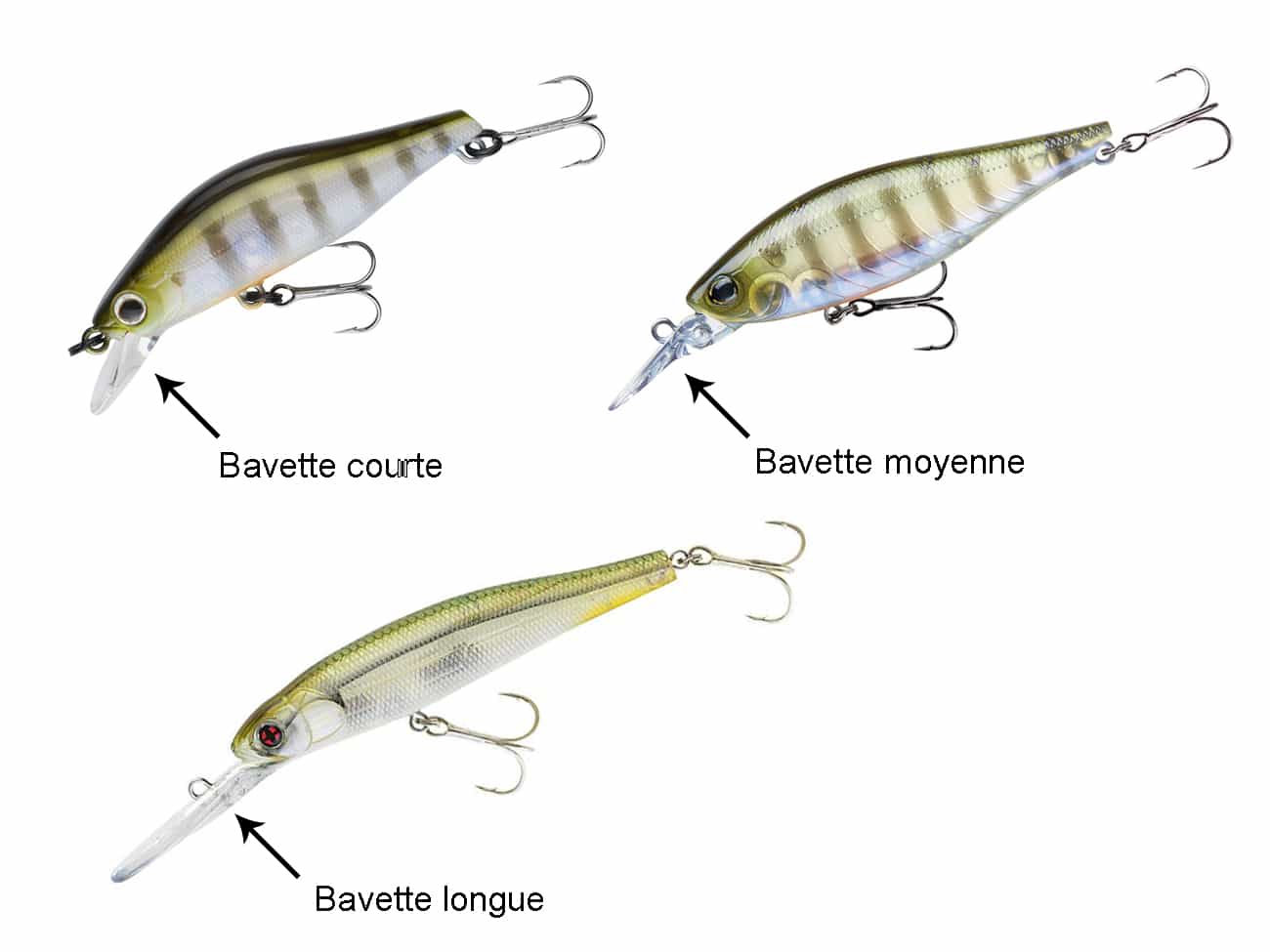
The fishing depth of your jerkbait swimming lures is dictated by the lip fitted at the head of the swimming lure. Depending on its angle, length and width, your jerkbait searches different layers of water. With a small lip, your swimming lure will run below the surface layer of water. With a long, wide lip, it fishes deeper. The lip then gives more purchase on the water. As a result, the pressure exerted by the water forces it to fish much deeper. For many jerkbait models the fishing depth is shown on the packaging of your product.
Jerkbaits fitted with a long lip allow deeper searching of the water, 2 to 3 metres and below. They are also called long-bill minnows.
What type of action for your jerkbait swimming lures?
The letter F, S or SP indicates how the lure behaves when you stop the retrieve. A lure tagged F (floating) rises to the surface. A lure tagged S (sinking) dives into the water column. Conversely, a lure tagged SP (suspending) stays suspended at the depth where it was when you stop your retrieve.
The jerkbaits that sink, or sinking in English (S), are used to fish deeper. Their higher density makes the lure go down the water column and so fish much deeper. But it is more sensitive to obstacles and the risk of losing it is higher.
Conversely, the floating lure (F) rises towards the surface when you stop the retrieve. If you hit or feel an obstacle (stone, stumps, etc.), you should stop working the lure and it rises into the upper layer of water. When you resume the retrieve, the jerkbait is then nearer the surface and so passes over the obstacles. That way you avoid snags and substantial losses of swimming lures.
What colour for your jerkbait swimming lure?
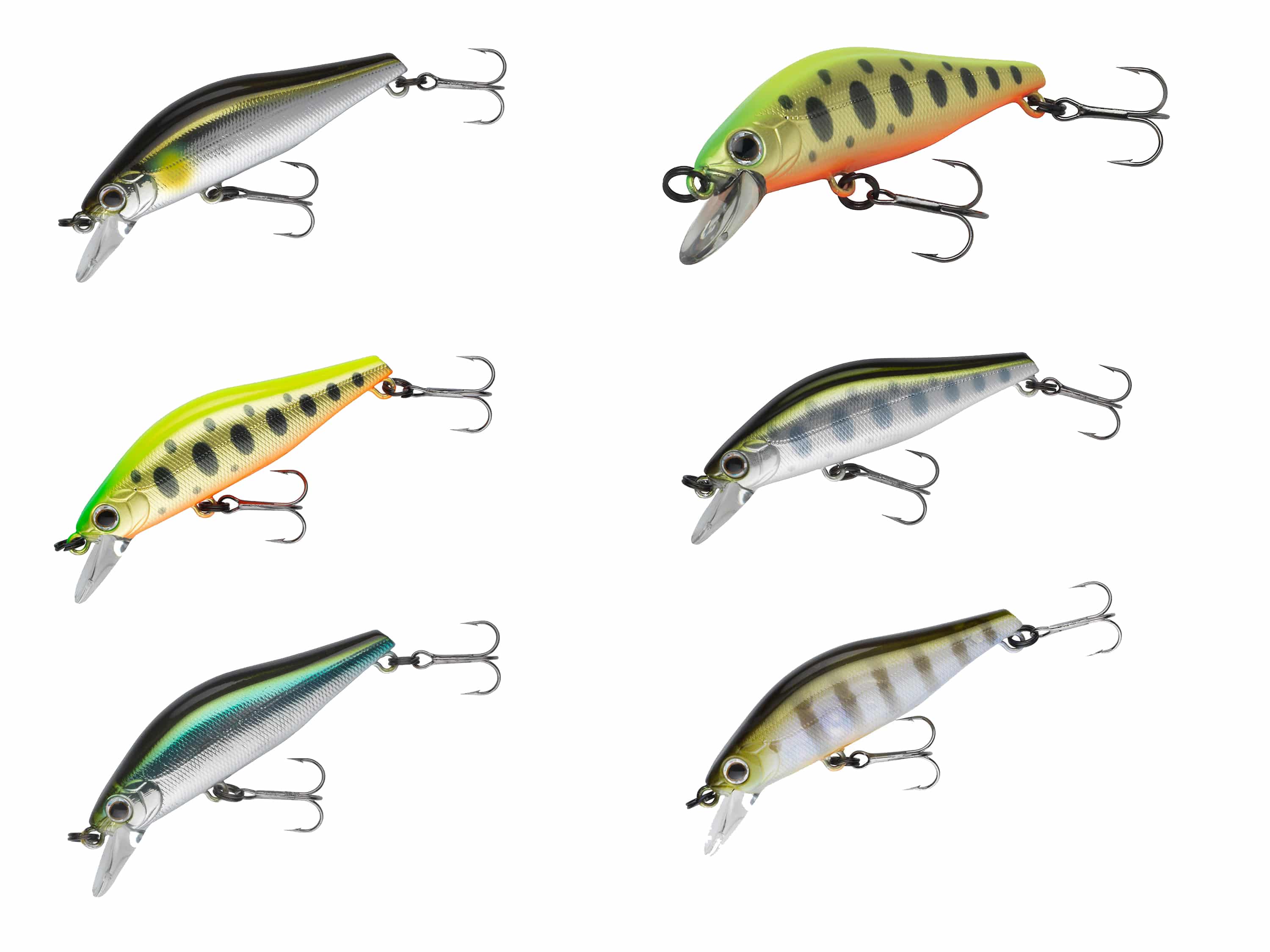
The eternal colour debate!!! In theory it is good practice to use lures in natural colours in relatively clear water, to best imitate the colouring of the small fish present. In coloured, dirty water it seems preferable to use more eye-catching colours, to make your jerkbait swimming lures more visible to predators. But theory is not always a guarantee of success. Many times our young apprentice anglers have hooked nice fish with apparently unsuitable colours. I simply advise you to keep the rule above in mind, and above all not to hesitate to change colour if no fish has reacted.
How to work your jerkbait swimming lures well?
The jerkbait swimming lures need to be worked with more or less sharp pulls, interspersed with pauses that often trigger the attack. Thanks to these actions, the jerkbait swimming lure becomes formidably effective by imitating the side-to-side darts of a prey in total panic trying to escape predators.
The basic technique is very simple and consists of working the lure with the rod, using the reel only to take in the slack in the line after each pull.
Once the lure is in the water, rod low, tip pointing at the surface, give a short, sharp jerk of the rod tip to make your jerkbait move. From the first jerk (i.e. a twitch or a pull) immediately let a little slack. The lure leaps forward. The beats of its body are accompanied by a more or less high-pitched sound produced by the rattles inside your lure.
When the lure stops, you take in the slack and follow with a new pull, which sends it off in a new direction. And so on: jerk, release, retrieve, jerk, and so on. It is as simple as that.
These sudden darts imitate a disoriented little fish well. So, as you work it, your swimming lure sends out flashes of light in every direction. Horizontal when it lies across, and downwards when it rolls over on itself. These 2 mechanical actions, typical of a jerkbait are called rolling and wobbling.
Rolling
This is the movement the lure makes when it rolls over on itself from right to left, alternately showing its right flank, then its left flank.
Wobbling
When you retrieve your line, the lure will give you the impression of vibrating, of wriggling on the spot from left to right. Vibrating without leaving its path.
With the different arguments I have just presented to you, you should now be inclined to choose the right swimming lure for the fishing situation you encounter.